

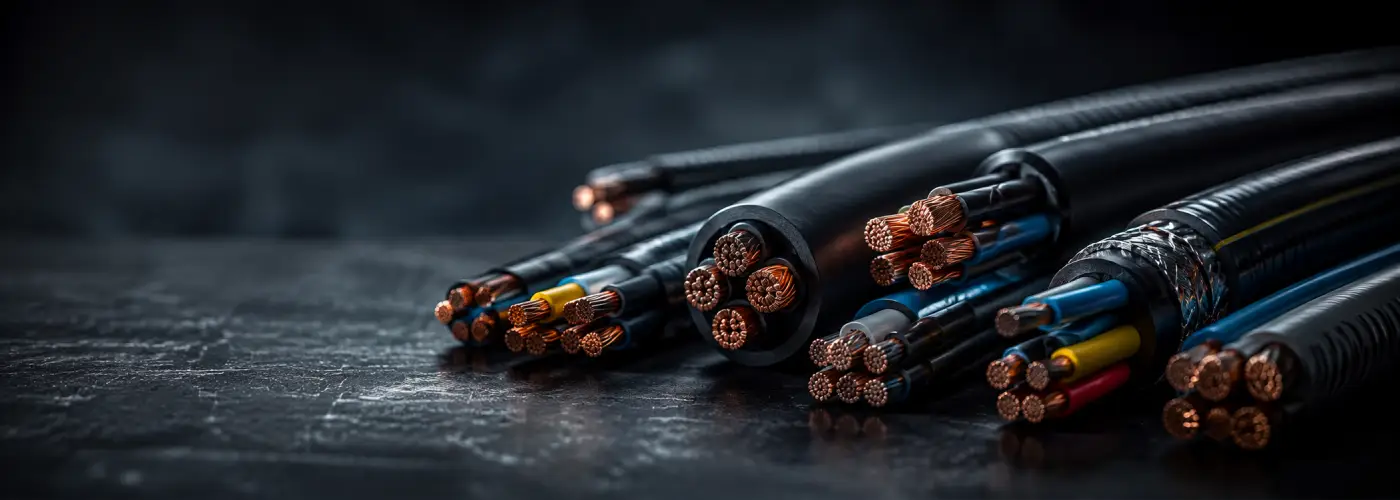
Industrial Cables Supplier
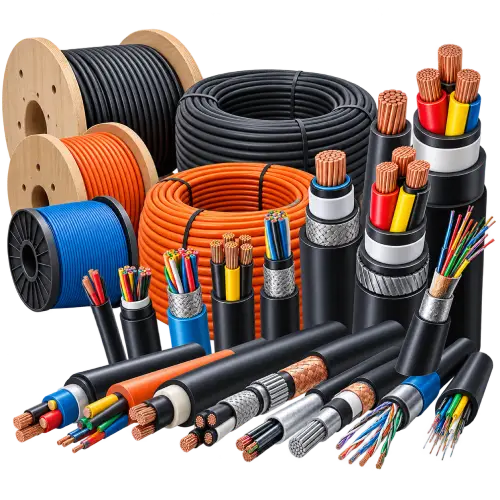
Sohum Industrial Sales Corporation is a trusted Industrial Cables Supplier providing cable solutions for demanding electrical and industrial environments. We serve customers across West Bengal, Kolkata, Odisha, Chhattisgarh, Bihar, Arunachal Pradesh, Assam, Manipur, Meghalaya, Mizoram, Nagaland, Tripura and Bhutan.
Industrial Cables are used in environments where ordinary wiring may not be sufficient. Manufacturing equipment, automated machinery, production lines, control systems, material-handling equipment, and industrial infrastructure can expose cables to heat, vibration, movement, moisture, mechanical stress, electrical interference, and continuous operation. Selecting a cable that matches these conditions is therefore an important part of Sohum Industrial Sales Corporational planning.
Cables That Keep Industrial Operations Connected
In a modern industrial facility, electrical power and signals continuously move between machines, panels, sensors, motors, drives, instruments, and control systems. Industrial cables provide the physical connection that allows these systems to work together.
Depending on the construction and application, industrial cables may be used for:
- Machinery wiring
- Factory automation
- Production lines
- Motor connections
- Control systems
- Industrial panels
- Drives and equipment
- Sensors and instrumentation
- Material-handling systems
- Process equipment
- Power distribution
- Industrial infrastructure
Rather than selecting a cable based only on its conductor size, the operating environment should also be considered.
Built for the Reality of Industrial Environments
Industrial installations can be significantly more demanding than conventional electrical systems. A cable installed beside heavy machinery may experience vibration and movement, while another installed in a production area may encounter oil, moisture, heat, abrasion, or mechanical impact.
Depending on the application, industrial cable selection may involve consideration of:
- Mechanical Stress: Where cables may be exposed to impact, crushing, abrasion, or repeated movement.
- Temperature: For installations exposed to elevated or fluctuating temperatures.
- Flexibility: Particularly important for moving machinery, robotic equipment, and flexible cable routes.
- Electrical Interference: Relevant to control, instrumentation, and signal circuits operating near electrical equipment.
- Environmental Exposure: Outdoor, damp, dusty, chemical, or industrial environments may require specific cable constructions.
Industrial Cable Applications across Modern Manufacturing
- Factory Automation
Automated production environments depend on connections between controllers, drives, sensors, motors, actuators, and other equipment. Suitable industrial cables help establish these connections.
- Machinery & Machine Tools
Industrial machines often require separate power, control, feedback, and signal connections. Cable selection can vary depending on whether the installation is fixed or involves continuous movement.
- Conveyor & Material Handling Systems
Conveyors, cranes, lifting equipment, and material-handling machinery may require cables capable of operating under movement, vibration, and repeated mechanical activity.
- Process Industries
Manufacturing and process facilities may require specialized cable solutions for motors, control equipment, instruments, pumps, valves, and other plant systems.
- Control Panels & Industrial Equipment
Industrial Cables can connect field equipment with control panels and other electrical systems, helping maintain organized and functional industrial wiring arrangements.
What Should You Look for in an Industrial Cable?
A good Industrial Cable is one whose construction corresponds with the environment in which it will operate.
Before selecting a cable, important factors may include:
- Operating voltage
- Current requirement
- Conductor material
- Conductor cross-section
- Number of cores
- Insulation material
- Sheath construction
- Flexibility
- Bending requirements
- Temperature range
- Oil or chemical exposure
- Moisture resistance
- Mechanical protection
- Shielding requirements
- Installation method
- Expected movement
- Applicable standards
For machinery and automation applications, factors such as minimum bending radius, torsional movement, drag-chain suitability, and repeated flexing may also become important.
Industrial Cables for Fixed & Moving Applications
Not all industrial cable installations are stationary.
- Fixed Installations
Fixed industrial cables may be used for permanent connections between distribution equipment, control panels, machines, motors, and plant infrastructure.
- Flexible Applications
Where equipment moves during operation, the cable may need greater flexibility and resistance to repeated bending.
- Continuous-Movement Systems
Robotic equipment, automated machinery, drag chains, and other dynamic systems can require cables specifically designed for repeated movement.
Choosing a conventional fixed cable for a continuously moving application may result in premature wear, which is why the cable’s intended duty should always be considered.
A Smarter Approach to Industrial Cable Procurement
Industrial Cable procurement is often part of a larger engineering requirement. The cable must work alongside the equipment, electrical system, installation method, and operating environment. Sohum Industrial Sales Corporation supports customers by focusing on practical requirements such as:
- What equipment will the cable connect?
- Is the installation fixed or moving?
- What voltage and current are involved?
- Will the cable be exposed to heat or moisture?
- Is mechanical protection required?
- Is shielding necessary?
- How frequently will the cable move?
- What installation standards apply?
This application-first approach can help customers avoid selecting a cable that looks suitable on paper but is not appropriate for the actual operating conditions.
Industrial Cable Solutions for Different Business Requirements
Our Industrial Cable supply supports requirements from:
- Manufacturing Companies
- Automation Integrators
- Electrical Contractors
- Machine Builders
- Panel Manufacturers
- EPC Companies
- Process Industries
- Infrastructure Developers
- Maintenance Teams
- Engineering Companies
- Commercial & Industrial Projects
Why Choose Sohum Industrial Sales Corporation?
- Industrial-Focused Product Understanding
Industrial Cable requirements can differ considerably from ordinary building-wire applications. Our focus is on cable categories intended for professional and industrial use.
- Suitable for Project Procurement
Whether the requirement is for machinery, a complete production line, an industrial expansion, or maintenance stock, cable requirements can be evaluated according to the project.
- Support Across Multiple Markets
Sohum Industrial Sales Corporation serves customers across West Bengal, Kolkata, Odisha, Chhattisgarh, Bihar, Arunachal Pradesh, Assam, Manipur, Meghalaya, Mizoram, Nagaland, and Tripura.
Designed Around Application Requirements
We believe the correct cable begins with understanding where and how it will be used. Customers can share their equipment details, operating conditions, cable dimensions, quantity, and technical requirements for appropriate product selection.
The Right Cable for the Right Industrial Job
Industrial Cables are not simply components hidden inside a factory’s electrical infrastructure. They form part of the connection network that keeps machines, controls, sensors, motors, and production systems operating together. From a stationary machine connection to a continuously moving automation system, the cable construction needs to match the job. Sohum Industrial Sales Corporation provides Industrial Cable sourcing support for customers looking for practical solutions across manufacturing, automation, machinery, process industries, infrastructure, and electrical projects.


