

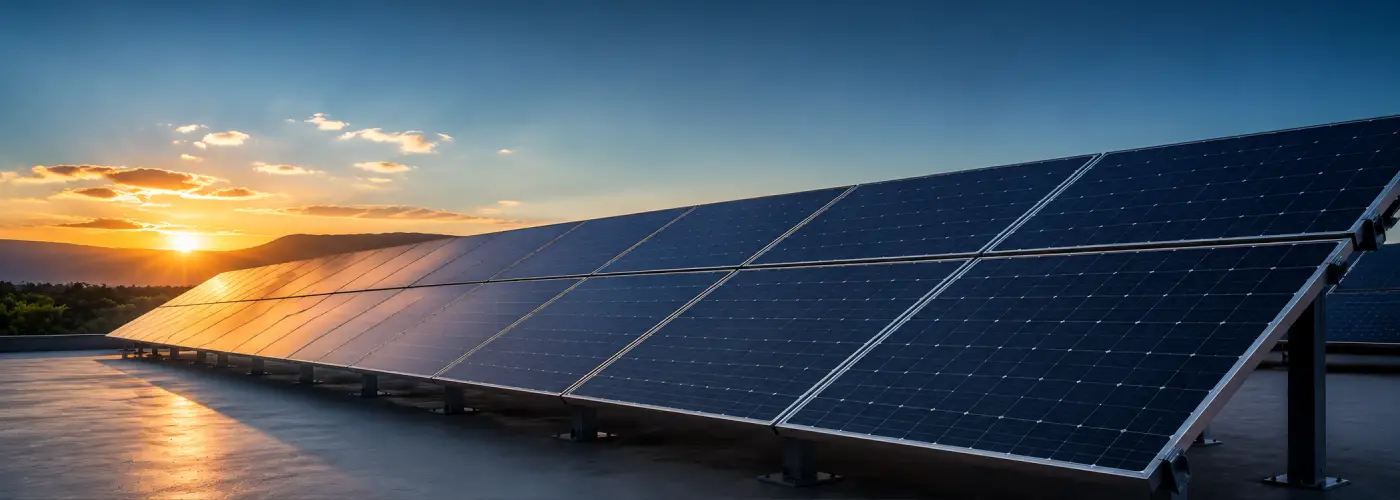
Solar DC Cables Supplier
Introduction to Our Product
In a solar power installation, electricity generated by PV modules travels through the DC side of the system before reaching the inverter. Solar DC Cables are specially designed for this environment, where cables may remain exposed to sunlight, heat, moisture, weather and mechanical stress for long periods.
Unlike ordinary electrical wires, photovoltaic cables are designed specifically for solar DC applications. IEC 62930 covers single-core cross-linked cables for the DC side of photovoltaic systems up to 1.5 kV DC.
Our Solar DC Cable range is suitable for rooftop solar systems, commercial and industrial PV plants, solar parks, EPC installations, inverter connections and other renewable-energy projects.
What Makes a Solar DC Cable Different?
A solar cable has to perform continuously in an outdoor environment. Therefore, the cable construction is important—not just the conductor size.
Typical PV DC cables feature:
- Fine-stranded tinned copper conductor
- Flexible Class 5 construction
- XLPO/XLPE cross-linked insulation
- Protective outer sheath
- UV and weather resistance
- Ozone resistance
- Flame-retardant characteristics
- Halogen-free options
- Resistance to moisture and environmental exposure
- Suitable flexibility for PV module interconnections
IEC 62930 specifies photovoltaic DC cables with cross-linked insulation and sheath, with normal continuous conductor operation up to 90°C and temporary operation up to 120°C under specified conditions.
Solar DC Cable Size Range
The correct cable size depends on current, cable length, installation method, allowable voltage drop, ambient temperature and grouping conditions.
Commonly used PV cable sizes include:
|
Cable Size |
Typical Application |
|
1.5 sq. mm |
Small DC auxiliary/interconnection applications |
|
2.5 sq. mm |
Smaller PV string connections |
|
4 sq. mm |
Common rooftop and string-level applications |
|
6 sq. mm |
Higher-current PV string connections |
|
10 sq. mm |
Higher-current / longer DC runs |
|
16 sq. mm |
Larger DC connection requirements |
|
25 sq. mm |
Higher-capacity DC circuits |
|
35 sq. mm |
Large DC cable routes |
|
50 sq. mm |
Higher-current solar installations |
|
70 sq. mm and above |
Project-specific high-current applications |
4 sq. mm and 6 sq. mm are commonly encountered in solar PV procurement, but the appropriate size should be established through electrical calculations rather than selected simply because it is a common size. A current product example for 4 sq. mm PV cable specifies tinned copper, XLPO insulation and EN 50618/IEC 62930 compliance.
Technical Specifications
|
Parameter |
Typical Specification |
|
Product |
Solar DC Cable / PV Cable |
|
Construction |
Single Core |
|
Conductor |
Fine-Stranded Tinned Copper |
|
Conductor Class |
Flexible Class 5 options |
|
Insulation |
XLPO / Cross-Linked Polyolefin |
|
Outer Sheath |
XLPO / Cross-Linked Material |
|
Voltage Rating |
Up to 1.5 kV DC for IEC 62930 applications |
|
Maximum PV System Voltage |
Model-dependent |
|
Operating Temperature |
Commonly -40°C to +90°C |
|
Short-Circuit Temperature |
Up to 250°C for specified short duration |
|
Colour |
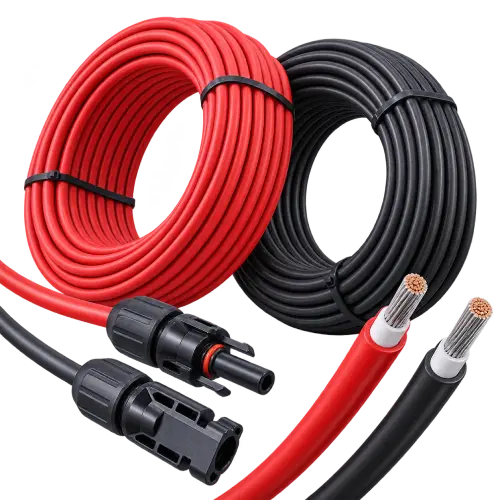
Red / Black commonly used |
|
Standards |
IS 17293 / IEC 62930 / EN 50618, as applicable |
|
UV Resistance |
Suitable solar-grade constructions |
|
Ozone Resistance |
Available in compliant PV constructions |
|
Flame Performance |
Model/specification dependent |
|
Installation |
Indoor / Outdoor PV applications |
IS 17293:2020 is an important Indian specification for DC solar cables; current Indian product information from RR Kabel states that its IS 17293-marked solar cable complies with IEC 62930.
Solar DC Cable Construction
- Tinned Copper Conductor
Fine-stranded tinned copper provides conductivity and flexibility for PV connections. Tinning also provides additional protection to the copper surface in demanding environments.
- XLPO Insulation
Cross-linked polyolefin insulation is commonly used in solar cables because it is designed for the temperature and environmental demands of photovoltaic installations.
- Outer Sheath
The outer sheath protects the cable from external conditions such as sunlight, moisture, abrasion and environmental exposure.
- Solar-Grade Identification
Red and black cables are commonly used to distinguish positive and negative DC connections, subject to the system’s wiring practice.
Where Solar DC Cables Are Used
- Rooftop Solar Systems
Used for connecting PV modules, strings, junction boxes and inverters.
- Commercial & Industrial Solar Plants
Suitable for larger PV installations where extensive DC cable routing is required.
- Utility-Scale Solar Parks
Used across large solar arrays for DC power transmission between PV strings, combiner systems and inverter stations.
- Solar Water Pumping Systems
Can be used in PV-powered pumping installations for DC connections.
- Floating Solar Projects
Solar-grade cables with suitable environmental characteristics can be selected for floating PV applications according to the project design.
- Solar Street Lighting
Suitable solar DC cable configurations can be used for PV panel and charge-controller connections.
Choosing the Right Solar DC Cable Size
Cable selection should not be based on current alone.
Consider These Factors:
- Current Carrying Capacity
- Voltage Drop
- Ambient Temperature
- Cable Grouping
- Installation Method
- Short-Circuit Conditions
Why Solar DC Cable Quality Matters
A solar installation is expected to operate for many years. Replacing a DC cable after installation can be expensive because the cable may run across rooftops, cable trays, module structures or underground routes.
A suitable solar cable can help provide:
- Reliable PV power transmission
- Better resistance to outdoor exposure
- Long-term mechanical performance
- Reduced risk of insulation deterioration
- Stable electrical connection
- Better suitability for solar-system operating conditions
Some solar cable specifications target long service life; for example, EN 50618/IEC 62930-related PV cable guidance commonly references a 25-year expected service life under specified normal operating conditions.
Solar DC Cable vs Ordinary Electrical Cable
|
Feature |
Solar DC Cable |
Ordinary Electrical Cable |
|
Main Application |
PV DC systems |
General electrical installations |
|
UV Resistance |
Designed for solar exposure |
Depends on cable type |
|
Outdoor Solar Use |
Specifically designed |
Not necessarily suitable |
|
Construction |
Solar-specific insulation/sheath |
Application-dependent |
|
Temperature Performance |
Designed for PV conditions |
Varies by product |
|
Flexibility |
Typically high |
Varies |
|
Standards |
IS 17293 / IEC 62930 / EN 50618 as applicable |
Depends on cable type |
Using a general-purpose cable where a solar-grade cable is specified can create unnecessary long-term risks. The cable should always match the PV system design and applicable standards.
Why Choose Us as Your Solar DC Cable Supplier?
- We Focus on Solar-Specific Requirements
We understand that a PV cable is not simply another electrical wire. Its insulation, sheath, conductor construction, voltage rating and environmental resistance all matter.
- Multiple Cross-Section Options
Customers can source different sizes, from smaller string cables to larger DC connection cables, depending on the project requirement.
- Project-Based Supply
Whether the requirement is for a rooftop installation, commercial solar plant or utility-scale project, cable quantity and specification can be discussed according to the project design.
- Specification-Oriented Procurement
We can help customers compare important parameters such as:
Conductor Material → Cable Size → Voltage Rating → Insulation → Sheath → Standard → Temperature Rating → Installation Requirement
- Suitable for EPC & Contractor Requirements
Our supply approach is suitable for solar EPC companies, electrical contractors, installers, developers and project procurement teams.
- Competitive Pricing
Solar cable pricing depends on copper content, cross-sectional area, construction, certification, brand, quantity and market conditions. We aim to provide competitive commercial options according to the required specification.
Quality You Can Trust
A Solar DC Cable remains an important part of the PV system throughout its operating life. We therefore focus on helping customers source cables according to system voltage, current, installation environment, cable length and applicable standards. Rather than treating every solar project as identical, we encourage customers to provide the PV system details before finalizing cable size and construction.
Applications at a Glance
Rooftop Solar | Industrial Solar | Commercial PV | Utility Solar Parks | Solar Water Pumps | Floating Solar | Solar Street Lighting | Solar EPC Projects | PV Module Interconnection | Inverter DC Connections
Get the Right Solar DC Cable for Your Project
Looking for a reliable Solar DC Cable supplier for a rooftop, commercial, industrial or utility-scale solar project? Share your required cable size, voltage rating, quantity, route length and applicable specification to identify a suitable PV cable.
Solar Power Needs Solar-Grade Connections
From 1.5 sq. mm to larger project-specific sizes, we can support Solar DC Cable requirements with a focus on proper specification, dependable construction and long-term PV application suitability. Choose the right Solar DC Cable today for safer, more dependable and efficient solar power transmission.


