

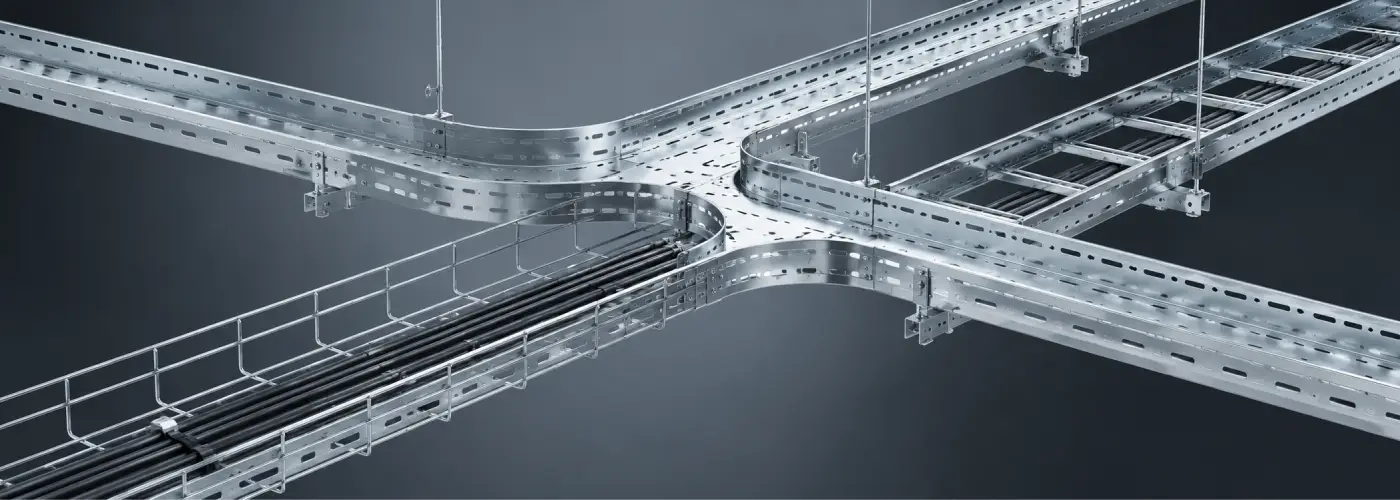
Hot Dip Galvanized Cable Tray Manufacturer
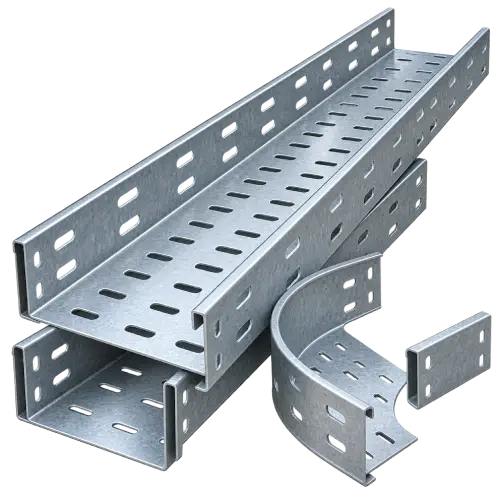
Sohum Industrial Sales Corporation is a Hot Dip Galvanized Cable Trays Manufacturer for electrical cable-support systems used in factories, power projects, commercial buildings, process plants, infrastructure facilities and outdoor installations. The company caters to requirements across West Bengal, Kolkata, Odisha, Chhattisgarh, Bihar, Arunachal Pradesh, Assam, Manipur, Meghalaya, Mizoram, Nagaland, Tripura and Bhutan. Hot-dip galvanizing gives the fabricated steel tray a zinc coating intended to protect the underlying steel from corrosion. This makes HDG cable trays a practical option for installations where the cable-support structure may encounter moisture, humidity, outdoor exposure or industrial atmospheric conditions.
From Fabricated Steel to a Corrosion-Resistant Cable Route
A Hot Dip Galvanized Cable Tray begins as a fabricated steel cable-support structure. Instead of relying only on paint for protection, the finished component undergoes a galvanizing process in which it is immersed in molten zinc.
The resulting zinc coating acts as a protective barrier and can also provide sacrificial protection to exposed steel areas.
This makes HDG cable trays particularly useful when ordinary untreated steel would be exposed to conditions that could accelerate corrosion.
How the Hot-Dip Galvanizing Process Works
The galvanizing process is an important part of the product’s performance.
A simplified sequence is:
Steel Fabrication
↓
Surface Cleaning & Preparation
↓
Fluxing / Galvanizing Preparation
↓
Immersion in Molten Zinc
↓
Zinc Coating Formation
↓
Cooling & Inspection
↓
Finished HDG Cable Tray
The zinc coating is metallurgically bonded to the steel surface, creating a protective layer rather than simply depositing a conventional paint film.
Why Zinc Protection Makes a Difference
The purpose of galvanizing is not merely to give the tray a bright metallic appearance.
The zinc coating provides several forms of protection:
- Barrier Protection
The coating separates the steel substrate from atmospheric moisture and other corrosive elements.
- Sacrificial Protection
Zinc is more electrochemically active than steel, allowing it to provide sacrificial protection to exposed areas under appropriate conditions.
- Long-Term Surface Protection
A properly specified galvanized coating can provide useful corrosion resistance without requiring frequent repainting in many environments.
- Protection of Fabricated Components
When the galvanizing process is correctly carried out, the coating can cover a large proportion of the tray’s accessible surfaces.
Technical Specification Chart
The following chart provides a general product framework. Final specifications should be selected according to cable loading, environmental conditions and project drawings.
|
Parameter |
Typical Specification / Option |
|
Product |
Hot Dip Galvanized Cable Tray |
|
Base Material |
Mild Steel / Carbon Steel |
|
Manufacturing Form |
Ladder / Perforated / Other specified profile |
|
Surface Treatment |
Hot Dip Galvanizing |
|
Tray Width |
Project Specific |
|
Side Height |
Project Specific |
|
Material Thickness |
Based on structural requirement |
|
Tray Length |
As required |
|
Load Capacity |
Dependent on design & support span |
|
Cable Application |
Power / Control / Instrumentation |
|
Installation |
Indoor / Outdoor |
|
Support |
Wall / Ceiling / Floor / Structural |
|
Covers |
Optional |
|
Accessories |
Bends / Tees / Crosses / Reducers / Couplers |
|
Zinc Coating |
As specified by applicable standard/project |
|
Earthing/Bonding |
According to electrical installation requirements |
Important: Zinc coating thickness, steel grade, tray dimensions and permissible loading should be confirmed from the approved product specification. A generic coating thickness or load value should not be assumed for every HDG tray.
What Types of Cable Trays Can Be Hot-Dip Galvanized?
The hot-dip galvanizing process can be applied to suitable fabricated steel cable-support products.
Depending on the manufacturing design, HDG options can include:
HDG Ladder Cable Trays
Suitable for organised routing of power and industrial cables.
HDG Perforated Cable Trays
Useful where a continuous tray base with ventilation and cable-fixing openings is preferred.
HDG Heavy-Duty Cable Trays
Designed around higher mechanical loading requirements, subject to the actual structural design.
HDG Cable Tray Accessories
Bends, tees, crosses, reducers and coupling components can also be specified with suitable corrosion protection.
Where HDG Cable Trays Are Particularly Useful
- Outdoor Electrical Installations
Exposure to rain, humidity and changing weather conditions makes corrosion protection an important consideration for outdoor cable-support structures.
- Industrial Plants
Factories can expose electrical infrastructure to moisture, dust, chemicals and other atmospheric contaminants. The appropriate galvanized specification can help address corrosion concerns.
- Power & Utility Projects
HDG trays can be used for suitable cable routes around substations, utility systems and electrical infrastructure.
- Infrastructure Projects
Large infrastructure installations often involve extensive cable routes exposed to varying environmental conditions.
- Solar Power Installations
Suitable HDG cable trays can be used for selected cable routes in solar projects, particularly where outdoor exposure is expected.
- Water & Pumping Facilities
Moisture-prone environments may benefit from appropriately corrosion-protected cable-support systems.
HDG Cable Tray Is More Than Just a Coating
One important point in galvanized cable-tray manufacturing is that the steel design still matters.
Galvanizing does not automatically make an undersized tray suitable for a heavy cable load.
The complete design needs to consider:
- Steel grade
- Tray profile
- Material thickness
- Tray width
- Side-rail geometry
- Support spacing
- Cable weight
- Joint design
- Environmental exposure
The corrosion-protection system and structural design therefore need to be considered separately.
Cable Load & Support Span: Two Connected Factors
The amount of cable a tray can safely carry is affected by the distance between its supports.
For example, increasing the support span can change the structural behaviour of the tray even when the tray itself has not changed.
Before selecting an HDG Cable Tray, it is useful to establish:
Cable Load + Tray Width + Tray Profile + Support Span = Required Structural Configuration
For project applications, the manufacturer’s load/span data should be used rather than relying on a generic “heavy-duty” label.
Choosing the Right Galvanized Tray for the Environment
Not every installation needs the same level of corrosion protection.
|
Application Condition |
Selection Consideration |
|
Dry indoor area |
Standard coated steel may be sufficient |
|
Humid indoor area |
Galvanized protection may be beneficial |
|
Outdoor installation |
HDG is commonly considered |
|
Industrial atmosphere |
Coating requirement should match exposure |
|
Chemical exposure |
Chemical compatibility should be assessed |
|
Coastal environment |
Higher corrosion resistance may be required |
|
Highly aggressive atmosphere |
Material and coating should be specifically engineered |
The actual atmospheric corrosivity category and project requirements should be evaluated before finalising the specification.
HDG Cable Tray Accessories
A cable route requires more than straight tray sections. Sohum Industrial Sales Corporation can cater to requirements for compatible components such as:
- Horizontal bends
- Vertical bends
- Tee sections
- Cross sections
- Reducers
- Coupler plates
- Jointing hardware
- End plates
- Covers
- Support brackets
- Cantilever arms
- Hangers
- Clamps
- Fasteners
Matching the accessories with the tray system helps maintain continuity throughout the installation.
Cable Tray Covers for Outdoor Routes
In certain installations, a cover may be added over the tray.
A suitable cover can help reduce direct exposure to:
- Falling debris
- Dust
- Sunlight
- Rain splash
- Accidental contact
However, a tray cover should not automatically be considered a waterproof enclosure. The complete tray-and-cover design should be evaluated according to the required environmental protection.
HDG vs Powder-Coated Cable Tray
These two finishes are often selected for different reasons.
|
Point of Comparison |
Hot Dip Galvanized |
Powder Coated |
|
Base |
Usually fabricated steel |
Usually fabricated steel |
|
Protection Method |
Zinc coating |
Polymer coating |
|
Typical Use |
Outdoor/industrial exposure |
Many indoor applications |
|
Surface |
Metallic zinc finish |
Smooth coated finish |
|
Repair Consideration |
Zinc-based protection |
Coating-specific repair |
|
Colour Options |
Naturally galvanized appearance |
Wide colour selection |
|
Environmental Suitability |
Depends on galvanizing specification |
Depends on coating and environment |
Neither finish is universally superior. The correct choice depends on the installation environment and project requirements.
Manufacturing Features That Influence Tray Performance
As a Hot Dip Galvanized Cable Tray Manufacturer, Sohum Industrial Sales Corporation considers the tray’s fabricated construction before the galvanizing stage.
Important manufacturing factors include:
- Accurate tray dimensions
- Proper side-rail formation
- Consistent perforations, where applicable
- Correct rung spacing for ladder designs
- Suitable welding
- Proper drainage/venting provisions for galvanizing where required
- Correct handling during galvanizing
- Surface preparation
- Zinc coating quality
- Accessory compatibility
These details help ensure that the finished tray is both structurally suitable and properly protected.
What Is Checked After Galvanizing?
Depending on project requirements, inspection can include:
- Overall dimensions
- Visual coating condition
- Coating uniformity
- Adhesion/quality checks as specified
- Surface defects
- Drainage or venting-related finish
- Straightness
- Joint compatibility
- Accessory fit
- Material verification
For projects with a specified galvanizing standard, the coating requirements should be checked against that standard.
Cable Tray Earthing & Electrical Bonding
Metallic cable trays can form part of the electrical installation’s bonding/earthing arrangement, but galvanization alone should not be assumed to satisfy every earthing requirement.
The installation should follow the applicable electrical design and local/project requirements for:
- Electrical continuity
- Bonding across joints
- Protective earthing
- Connection to the site’s earthing system
The requirements can vary depending on the electrical system and applicable standards.
Information Required for HDG Cable Tray Manufacturing
For an accurate quotation and technical configuration, customers can provide:
- Tray type
- Required width
- Side height
- Material thickness
- Steel grade
- Required length
- Cable quantity
- Approximate cable weight
- Support span
- Installation location
- Indoor/outdoor requirement
- Galvanizing specification
- Cover requirement
- Accessories
- Quantity
- Project drawings, if available
This information allows the tray to be designed around the actual installation instead of using a generic configuration.
Applications Across Multiple Industries
Hot Dip Galvanized Cable Trays can be incorporated into cable-management systems used in:
- Manufacturing plants
- Steel industries
- Cement plants
- Power plants
- Substations
- Solar projects
- Chemical facilities
- Water treatment plants
- Warehouses
- Commercial complexes
- Infrastructure projects
- Engineering facilities
Suitability should always be assessed according to the environmental and electrical conditions of the site.
Why Sohum Industrial Sales Corporation?
Sohum Industrial Sales Corporation manufactures and supplies Hot Dip Galvanized Cable Trays for industrial and infrastructure requirements across West Bengal, Kolkata, Odisha, Chhattisgarh, Bihar, Arunachal Pradesh, Assam, Manipur, Meghalaya, Mizoram, Nagaland, Tripura and Bhutan. The company can cater to project requirements involving different tray profiles, dimensions, material thicknesses, galvanizing specifications, accessories and cable-support configurations. The focus is on selecting the tray according to the actual cable load, support arrangement and environmental exposure, rather than treating every installation with the same specification.
Built for Cable Routes Where Corrosion Cannot Be Ignored
An HDG Cable Tray combines a fabricated steel support structure with a protective zinc coating, making it a practical choice for many outdoor, humid and industrial cable-routing environments. For the best result, the specification should bring together structural capacity, galvanizing requirements, cable loading, support span and site conditions. Sohum Industrial Sales Corporation manufactures and supplies Hot Dip Galvanized Cable Trays for electrical and industrial projects throughout eastern and northeastern India.


