

Wire Mesh Cable Trays Manufacturer
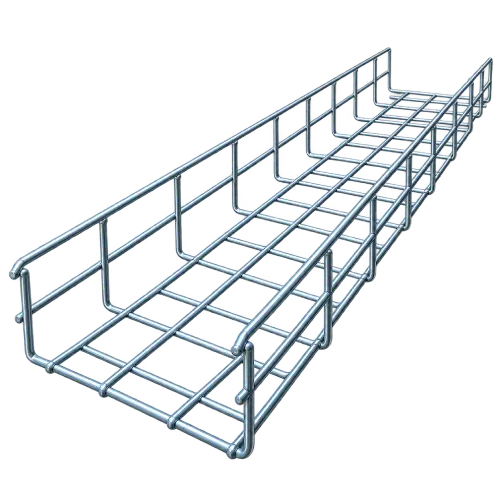
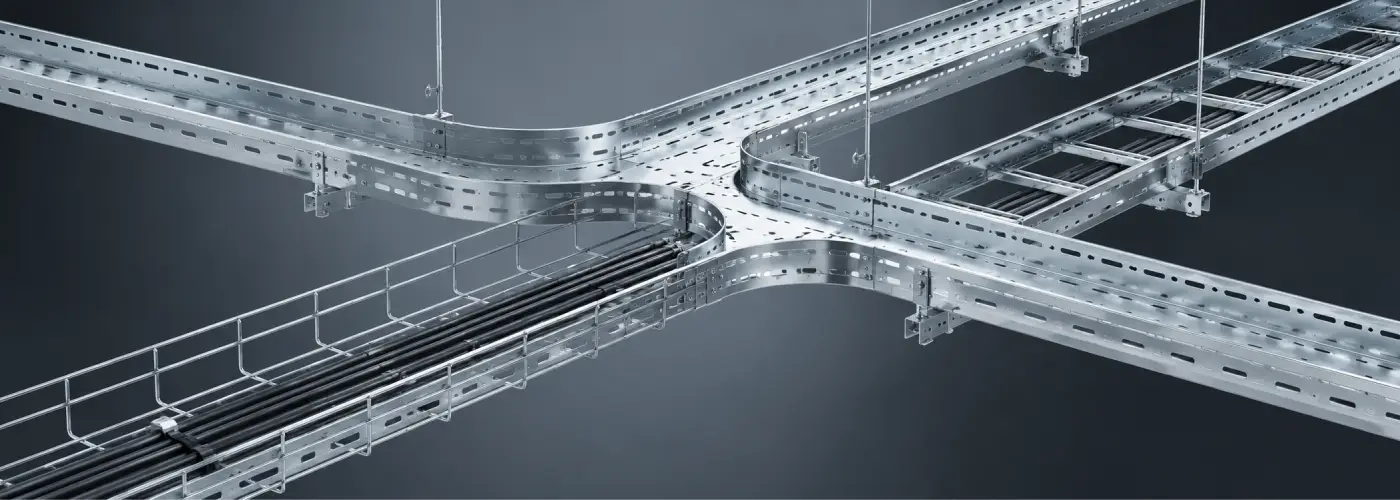
Sohum Industrial Sales Corporation is a Wire Mesh Cable Trays Manufacturer for organised routing of electrical, control, instrumentation, data and communication cables. The company serves industrial and commercial requirements across West Bengal, Kolkata, Odisha, Chhattisgarh, Bihar, Arunachal Pradesh, Assam, Manipur, Meghalaya, Mizoram, Nagaland, Tripura and Bhutan.
Unlike solid-base cable-support systems, a wire mesh tray uses an open welded-wire structure. This makes it particularly useful in installations where air circulation, quick cable access and flexible routing are important.
A Cable Management System Built Around Flexibility
Wire Mesh Cable Tray is made from interconnected wire sections that form a basket-like pathway for cables. Its open framework allows cables to be viewed from multiple sides, making routing and maintenance comparatively convenient.
It is often selected for installations containing:
- Control cables
- Instrumentation cables
- Data cables
- Communication cables
- Low-voltage cables
- Building-service wiring
- Small and medium cable bundles
The final tray size and wire diameter should be selected according to the cable load and project requirements.
What Makes Wire Mesh Construction Useful?
The defining characteristic of this tray is its open-wire architecture.
Instead of using a continuous metal base, the cables rest within the mesh structure. This offers several practical benefits:
- Better visibility: Cables remain easy to identify after installation.
- Air circulation: The open structure permits airflow around the cables.
- Accessible routing: Installers can position and secure cables through the mesh openings.
- Adaptable layout: Suitable fittings can be used to create changes in direction and elevation.
- Lightweight handling: Compared with some heavier tray constructions, wire mesh systems can be easier to handle during installation.
Technical Profile of Wire Mesh Cable Trays
|
Specification |
Typical Requirement / Option |
|
Product |
Wire Mesh Cable Tray |
|
Construction |
Welded Wire Mesh |
|
Material |
MS / GI / Stainless Steel / Other specified material |
|
Wire Diameter |
Project Specific |
|
Width |
Application Specific |
|
Height |
Application Specific |
|
Length |
As required |
|
Surface Finish |
Galvanized / Powder Coated / Other specified finish |
|
Mesh Configuration |
Selected according to cable size |
|
Installation |
Indoor / Outdoor, as applicable |
|
Mounting |
Wall / Ceiling / Floor / Rack |
|
Cable Type |
Control / Instrumentation / Data / Communication / Electrical |
|
Accessories |
Bends / Tees / Crosses / Couplers / Supports |
|
Cover |
Optional |
|
Load Capacity |
Dependent on tray design and support span |
Note: The above is a general technical reference. Wire diameter, mesh dimensions, material grade, finish and permissible load should be confirmed against the actual project requirements.
Material Choices for Wire Mesh Trays
- Mild Steel Wire Mesh Tray
MS construction can be considered for general indoor applications where a robust and economical cable-support arrangement is required.
- Galvanized Wire Mesh Tray
A galvanized finish provides additional corrosion protection and can be suitable for locations exposed to moisture or moderately demanding environmental conditions.
- Stainless Steel Wire Mesh Tray
Stainless steel can be selected where enhanced corrosion resistance or hygienic construction is important.
- Powder Coated Wire Mesh Tray
Powder coating provides a finished protective surface and can be useful in indoor commercial and industrial installations.
The material and finish should always be selected according to the actual operating environment.
Where Wire Mesh Cable Trays Fit Best
- Control & Instrumentation Networks
The open structure provides easy access when numerous small control and instrumentation cables need to be routed and identified.
- Data & Communication Areas
Wire mesh trays can provide an organised pathway for suitable communication and data cabling.
- Industrial Automation Installations
They can be used to route control wiring around automation equipment, panels and machinery.
- Commercial Buildings
Suitable systems can be used for selected low-voltage, communication and building-service cables.
- Server & Technical Areas
The open construction can assist with cable visibility and maintenance in suitable technical installations.
- Manufacturing Facilities
Useful where cable routes may need modification as equipment layouts change.
Wire Mesh Cable Tray Installation
Correct installation is important for achieving the intended mechanical performance of the tray.
A typical installation may involve:
Support Structure → Tray Sections → Coupling → Directional Accessories → Cable Placement → Cable Securing
Depending on the site, the tray may be supported using:
- Wall brackets
- Cantilever brackets
- Ceiling supports
- Threaded-rod hangers
- Trapeze supports
- Structural channels
- Floor-mounted supports
Support spacing should be determined according to the manufacturer’s load data and the expected cable weight.
Why Cable Load Should Be Calculated Before Selection
A wire mesh tray should not be selected simply by looking at its dimensions.
The design should consider:
- Total cable weight
- Number of cables
- Cable diameter
- Tray width
- Mesh construction
- Support span
- Installation direction
- Additional future cable load
- Environmental conditions
If additional cables are expected later, spare capacity can be incorporated into the tray selection from the beginning.
Wire Mesh Tray Accessories
A complete installation may require several accessories to maintain the cable route.
Available configurations can include:
- Horizontal bends
- Vertical bends
- Tee fittings
- Cross fittings
- Reducers
- Couplers
- Support brackets
- Hangers
- Clamps
- Fasteners
- End sections
- Tray covers
Using compatible accessories helps maintain the continuity and alignment of the cable-support system.
Wire Mesh Tray for Different Cable Categories
|
Cable Category |
Suitability |
|
Control Cables |
Highly suitable |
|
Instrumentation Cables |
Highly suitable |
|
Data Cables |
Suitable |
|
Communication Cables |
Suitable |
|
Small Power Cables |
Application dependent |
|
Large Heavy Power Cables |
Requires specific load/design evaluation |
|
Fibre-Optic Cables |
Suitable with appropriate installation practices |
For sensitive signal and communication cables, routing, separation and minimum bend radius should follow the relevant cable manufacturer’s recommendations and project requirements.
Wire Mesh vs Ladder Cable Tray
Rather than repeating the same advantages as a ladder tray, the following comparison highlights where their design priorities differ:
|
Aspect |
Wire Mesh Tray |
Ladder Tray |
|
Structure |
Welded wire network |
Side rails with rungs |
|
Flexibility |
High for smaller cable routes |
Strong option for larger routes |
|
Typical Cable Type |
Control/data/instrumentation |
Power/heavier cables |
|
Cable Visibility |
Excellent |
Excellent |
|
Airflow |
Excellent |
Excellent |
|
Handling |
Generally lightweight |
Depends on construction |
|
Small Cable Management |
Convenient |
May require additional securing |
|
Heavy Cable Loading |
Design dependent |
Often preferred where higher loading is required |
The correct choice should be based on actual cable characteristics rather than assuming one tray type is suitable for every project.
Corrosion Protection Options
Environmental exposure can significantly influence the life of a cable-support system.
For example:
- Dry indoor environment: suitable coated MS options may be considered.
- Humid areas: galvanized construction can provide additional protection.
- Outdoor installation: corrosion-resistant material or finish should be evaluated.
- Highly corrosive surroundings: SS or another appropriately engineered solution may be required.
The expected exposure to moisture, chemicals, salt and temperature should be communicated before final material selection.
Designing Around Future Cable Expansion
Cable networks frequently grow after a plant or building becomes operational.
For this reason, it can be useful to consider:
- Additional tray width
- Spare loading capacity
- Accessible cable routes
- Expandable support arrangements
- Extra connection points
- Space for future branches
Planning these elements during the initial installation can reduce the need for major modifications later.
Quality Checks for Manufactured Wire Mesh Trays
As a manufacturer, Sohum Industrial Sales Corporation can evaluate wire mesh trays against specified product requirements.
Typical checks may include:
- Overall dimensions
- Wire diameter
- Mesh opening
- Welding quality
- Section alignment
- Surface finish
- Coating/galvanizing condition
- Accessory compatibility
- General structural condition
For projects requiring defined loading performance, the applicable design and load data should be reviewed as part of the technical approval process.
Information Needed for a Custom Requirement
Customers can provide the following details when requesting Wire Mesh Cable Trays:
- Required tray width
- Tray height
- Material preference
- Wire diameter
- Surface finish
- Approximate cable load
- Support span
- Cable types
- Indoor or outdoor installation
- Required tray length
- Quantity
- Accessories required
- Cover requirement
- Project drawings, if available
This information helps develop a cable-support arrangement suited to the actual installation.
Why Sohum Industrial Sales Corporation?
Sohum Industrial Sales Corporation manufactures and supplies Wire Mesh Cable Trays for electrical and communication infrastructure across West Bengal, Kolkata, Odisha, Chhattisgarh, Bihar, Arunachal Pradesh, Assam, Manipur, Meghalaya, Mizoram, Nagaland, Tripura and Bhutan.
The company can cater to requirements involving different materials, dimensions, finishes, mesh configurations and installation accessories.
Rather than treating every cable route identically, the tray selection can be based on the type of cable, expected loading, support arrangement and environmental conditions.
A Practical Choice for Accessible Cable Routing
Wire Mesh Cable Trays are particularly useful when an installation needs visibility, ventilation and adaptable cable management without relying on a closed or solid-base structure.
For control, instrumentation, communication and suitable electrical cable routes, the right mesh configuration can provide a clean and accessible support system.
Sohum Industrial Sales Corporation manufactures and supplies Wire Mesh Cable Trays for industrial, commercial and infrastructure projects throughout eastern and northeastern India.


