

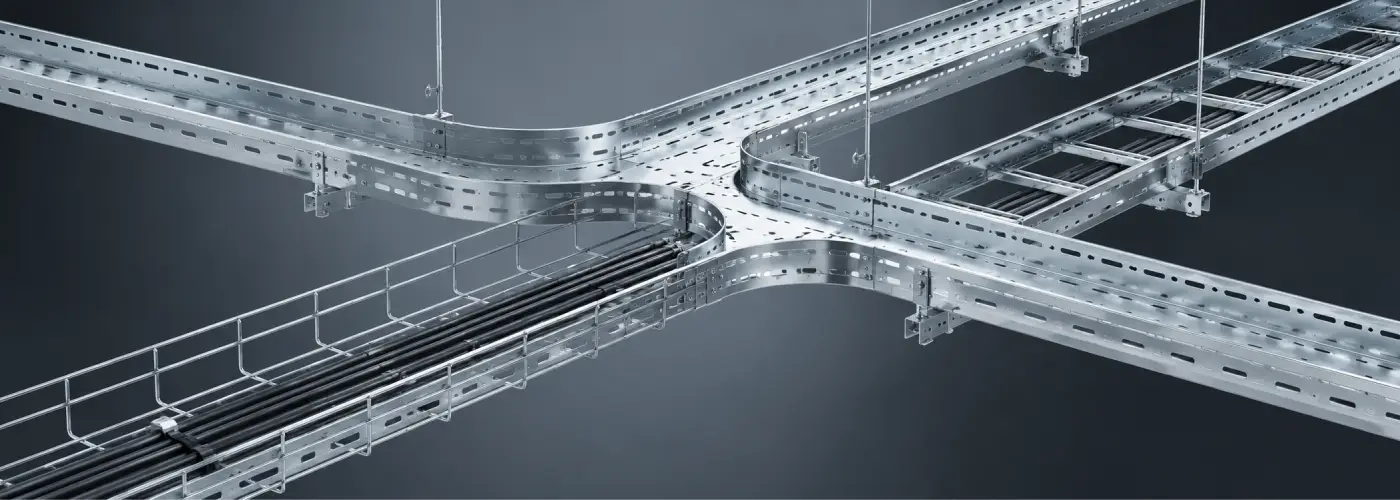
Ladder Type Cable Trays Manufacturer
Product Highlights
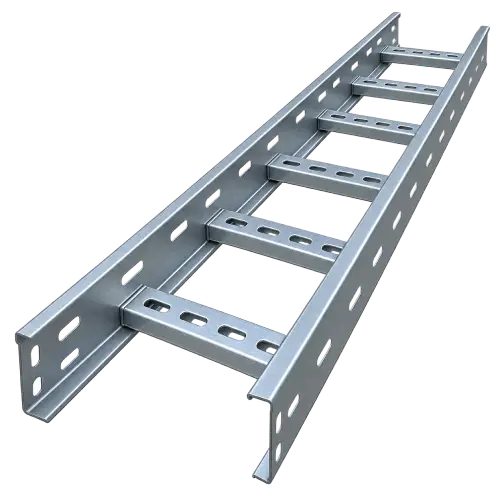
Sohum Industrial Sales Corporation is a Ladder Type Cable Trays Manufacturer for electrical, industrial, commercial, infrastructure and utility installations. The ladder-style construction provides a practical route for carrying and organising power, control, instrumentation and other cables over horizontal and vertical runs. Unlike a solid-bottom tray, a ladder tray uses longitudinal side rails connected by regularly spaced rungs. This open arrangement can provide convenient cable access, ventilation and easier visual inspection, making it a widely considered option for installations where cable routing and maintenance access are important.
Our Ladder Type Cable Trays can be manufactured according to project requirements covering dimensions, material, finish, loading requirements, support arrangement and installation conditions. We serve customers across West Bengal, Kolkata, Odisha, Chhattisgarh, Bihar, Arunachal Pradesh, Assam, Manipur, Meghalaya, Mizoram, Nagaland and Tripura.
What Is a Ladder Type Cable Tray?
A Ladder Type Cable Tray is a cable-support system consisting primarily of two longitudinal side members joined by cross rungs.
The rungs provide support for cables and can also be used with suitable cable cleats, ties or other approved accessories depending on the installation design.
Ladder trays are particularly useful when the installation requires:
- Long cable runs
- Multiple parallel cables
- Easy cable access
- Ventilation around cables
- Straight and organised routing
- Horizontal or vertical cable management
- Convenient maintenance access
- Integration with cable tray accessories
The tray itself is only one part of a cable-support system. The complete installation may also require bends, tees, reducers, couplers, covers, clamps, supports and other accessories.
What Makes This Product Different?
- Open Ladder Construction
The open framework provides access to cables from above and below where the installation permits, making inspection and cable additions more convenient.
- Improved Air Circulation
The spacing between the rungs allows air to move around the cables. This can be beneficial in installations where heat dissipation and cable grouping need to be considered.
- Convenient Cable Installation
Cables can be positioned and secured along the ladder arrangement without requiring the cable to be pulled through a completely enclosed channel.
- Suitable for Heavy Cable Routes
Depending on the design, material thickness, span and support arrangement, ladder trays can be engineered for substantial cable loads.
- Modular Cable Routing
Straight sections can be combined with bends, tees, crosses and other fittings to create a cable-routing network suited to the project layout.
- Easier Maintenance Access
The open configuration can make visual inspection, cable identification and maintenance work more accessible than fully enclosed cable-routing systems.
Product Dimensions & Ratings
Cable tray dimensions should be selected according to the number and type of cables, installation span, support spacing, available space and required load capacity.
Typical parameters to establish before manufacturing include:
Parameter | Requirement to Specify |
Tray Type | Ladder Type Cable Tray |
Overall Width | As required by cable quantity and layout |
Side Rail Height | According to design requirement |
Tray Length | Standard or project-specific |
Rung Spacing | As specified for the application |
Material | MS, GI, aluminium, stainless steel or other specified material |
Material Thickness | Based on structural and loading requirements |
Surface Finish | Hot-dip galvanised, pre-galvanised, powder coated, painted or specified finish |
Load Capacity | To be established for the actual support span |
Support Span | According to installation design |
Cable Arrangement | Power, control, instrumentation, communication or mixed application |
Fittings | Bend, tee, cross, reducer and other required accessories |
Joining System | Coupler/connection arrangement as specified |
Installation | Indoor, outdoor, plant area, rooftop, utility area or other environment |
Important Technical Point
There is no single load rating or thickness that is appropriate for every ladder cable tray. Tray width, material, thickness, rung design, span between supports, cable weight and installation method all affect the required design.
For project procurement, these parameters should be confirmed before finalising the tray specification.
Material & Surface Finish Options
The operating environment has a major influence on material and finish selection.
Mild Steel Cable Tray
MS construction can be considered for installations where mechanical strength and economical fabrication are important.
Galvanised Cable Tray
Galvanised finishes provide additional protection against atmospheric exposure and are commonly considered for industrial and outdoor installations.
Hot-Dip Galvanised Ladder Tray
Hot-dip galvanising can be selected for applications where enhanced corrosion protection is required, subject to the project’s specification and environmental conditions.
Stainless Steel Cable Tray
Stainless steel can be considered for demanding environments where corrosion resistance and material durability are important.
Aluminium Ladder Cable Tray
Aluminium offers a lightweight alternative for applications where reduced structural weight and corrosion resistance are considerations.
Powder-Coated Cable Tray
Powder coating can be specified where a particular finish, appearance or additional surface protection is required.
Performance Advantages
- Efficient Cable Organisation
Ladder trays create a defined route for cables, reducing uncontrolled cable runs and helping maintain an organised electrical installation.
- Ventilated Cable Support
The open construction permits ventilation around cables and reduces the amount of enclosed surface surrounding the cable route.
- Flexible System Expansion
Additional cables can often be accommodated more conveniently when spare tray capacity has been included during the original design.
- Accessible Cable Route
The open layout provides easier access for inspection, identification, cable securing and maintenance activities.
- Adaptable Installation
Straight sections and fittings can be configured for different plant layouts, equipment locations and route changes.
- Structural Design Options
Tray construction can be selected according to the expected cable weight, support span and environmental conditions.
Ladder Cable Tray for Industrial Cable Management
Industrial plants frequently have complex cable routes connecting electrical panels, motors, control systems, instrumentation, machinery and utility equipment.
A ladder-type system can be used to create planned routes between:
- Main electrical rooms
- Distribution panels
- MCCs
- Control panels
- Motor locations
- Production machinery
- Instrumentation areas
- Utility equipment
- Process units
- Transformer areas
- Cable risers
- Plant buildings
For industrial installations, tray capacity should be planned around present cable requirements as well as possible future additions.
Cable Tray Selection for Electrical Projects
Before ordering a ladder tray, project engineers and procurement teams should determine:
- Cable Quantity
Estimate the number, diameter and type of cables that will occupy the tray.
- Cable Weight
The combined cable weight affects the structural requirement of the tray system.
- Installation Span
The distance between tray supports directly influences the required structural performance.
- Environment
Indoor plant rooms, outdoor installations, humid areas, coastal locations and chemically exposed environments may require different material or surface protection.
- Available Space
Tray width and height should fit the designated route while maintaining appropriate separation and accessibility.
- Expansion Requirement
If future cable additions are expected, sufficient spare capacity can be considered during initial design.
- Fittings & Accessories
The tray route may require horizontal bends, vertical bends, tees, crosses, reducers, couplers and support hardware.
Reasons to Partner With Us
- Requirement-Based Manufacturing
Sohum Industrial Sales Corporation can discuss tray requirements based on dimensions, material, finish and project application rather than offering only a generic tray size.
- Project-Specific Quantities
We handle requirements ranging from individual installations to larger industrial and infrastructure projects.
- Multiple Material Choices
Customers can enquire about the appropriate material and finish based on the environmental and structural requirements of the project.
- Fabrication According to Requirement
Where project dimensions differ from standard requirements, fabrication details can be discussed based on the available design and specification.
- Cable Management Support
The requirement can include associated cable tray fittings and accessories needed to complete the planned route.
- Regional Supply Network
Our supply coverage includes multiple states across eastern, northeastern and central India.
Trusted Across Multiple Sectors
Ladder Type Cable Trays can be incorporated into cable-management systems across a variety of sectors.
- Manufacturing Plants
For routing power and control cables around production equipment, electrical rooms and machinery.
- Power & Electrical Infrastructure
For cable routes associated with electrical distribution, utility systems and supporting infrastructure.
- Steel & Engineering Industries
Suitable for organised cable routing within large industrial facilities where substantial electrical networks are installed.
- Cement & Process Industries
Can be incorporated into long-distance cable routes between electrical equipment and process units.
- Renewable Energy Projects
Useful for routing electrical cables in appropriately designed solar and renewable-energy installations.
- Commercial Buildings
Can be used for electrical and service-cable routing in commercial and institutional infrastructure.
- Data & Control Infrastructure
Depending on cable type and project design, ladder systems can provide structured routes for control and instrumentation cabling.
- Warehouses & Logistics Facilities
Can be used for overhead cable management in large facilities where open cable support is advantageous.
- Infrastructure Projects
Suitable for project-specific cable-routing requirements in transport, utilities and other infrastructure installations.
Why Industries Prefer Our Ladder Type Cable Trays
Industrial buyers generally look beyond the product’s appearance when selecting a cable tray. The tray must work with the cable load, support arrangement and installation environment.
Sohum Industrial Sales Corporation focuses on the practical requirements that influence cable tray selection:
- Required tray width and length
- Cable loading
- Support spacing
- Material selection
- Surface treatment
- Indoor or outdoor installation
- Corrosion exposure
- Required fittings
- Project drawing or BOQ
- Future cable capacity
- Quantity requirement
This approach helps procurement teams specify a cable tray system that is appropriate for the intended installation rather than relying on a generic size.
Ladder Type Cable Tray Accessories
A complete tray installation may require several associated components.
Depending on the route, these can include:
- Straight ladder tray sections
- Horizontal bends
- Vertical bends
- Tee sections
- Cross sections
- Reducers
- Coupler plates
- Jointing hardware
- Tray supports
- Hangers
- Clamps
- Covers where required
- Cable cleats
- Earthing/bonding accessories
- Mounting hardware
The exact accessory requirement depends on the cable route and installation method.
Manufacturing & Quality Considerations
For industrial cable trays, manufacturing quality is closely linked to dimensional consistency and structural integrity.
Important checks can include:
- Tray width and length
- Side-rail dimensions
- Rung alignment
- Material thickness
- Weld or joint quality
- Surface finish
- Galvanising or coating condition
- Edge condition
- Hole positioning where applicable
- Fitting compatibility
- Overall dimensional accuracy
For project orders, the manufacturing requirement can be aligned with the approved drawing, BOQ or technical specification provided by the customer.
B2B Procurement for Ladder Type Cable Trays
Our Ladder Type Cable Tray supply is suitable for:
- EPC contractors
- Electrical contractors
- Panel builders
- Industrial procurement teams
- OEMs
- Infrastructure companies
- Factory maintenance departments
- Engineering consultants
- Commercial construction projects
- Solar EPC companies
- Plant expansion projects
- MRO requirements
For a quotation, buyers can provide the tray size, material, finish, quantity and project location. Drawings or BOQs can also be shared where a project-specific configuration is required.
Frequently Asked Questions
A ladder cable tray is an open cable-support system consisting mainly of side rails connected by cross rungs. It is used to organise and support cables along planned routes.
They are commonly considered for industrial plants, electrical installations, commercial buildings, infrastructure projects, renewable-energy installations and other applications requiring organised cable routing.
Yes, subject to selecting an appropriate material and corrosion-protection finish for the environmental conditions and project specification.
Tray size depends on cable quantity, cable diameter, cable weight, required spacing, future expansion, support arrangement and available installation space.
Project-specific dimensions can be discussed based on the customer’s drawing, BOQ or technical specification.
Depending on the application, options may include mild steel, galvanised steel, stainless steel and aluminium, with different surface finishes where applicable.
Cable tray installations can require bends, tees, crosses, reducers, couplers and support accessories. Requirements can be discussed along with the main tray order.
We supply enquiries across West Bengal, Kolkata, Odisha, Chhattisgarh, Bihar, Arunachal Pradesh, Assam, Manipur, Meghalaya, Mizoram, Nagaland and Tripura.
Contact Sohum Industrial Sales Corporation
If you are looking for a Ladder Type Cable Tray Manufacturer for an industrial plant, commercial building, infrastructure project, solar installation or electrical cable-management requirement, contact Sohum Industrial Sales Corporation. Share your tray dimensions, material, finish, quantity, cable load requirement and delivery location for a project-specific quotation.
Company: Sohum Industrial Sales Corporation
Product: Ladder Type Cable Tray
Service Areas: West Bengal, Kolkata, Odisha, Chhattisgarh, Bihar, Arunachal Pradesh, Assam, Manipur, Meghalaya, Mizoram, Nagaland & Tripura


