

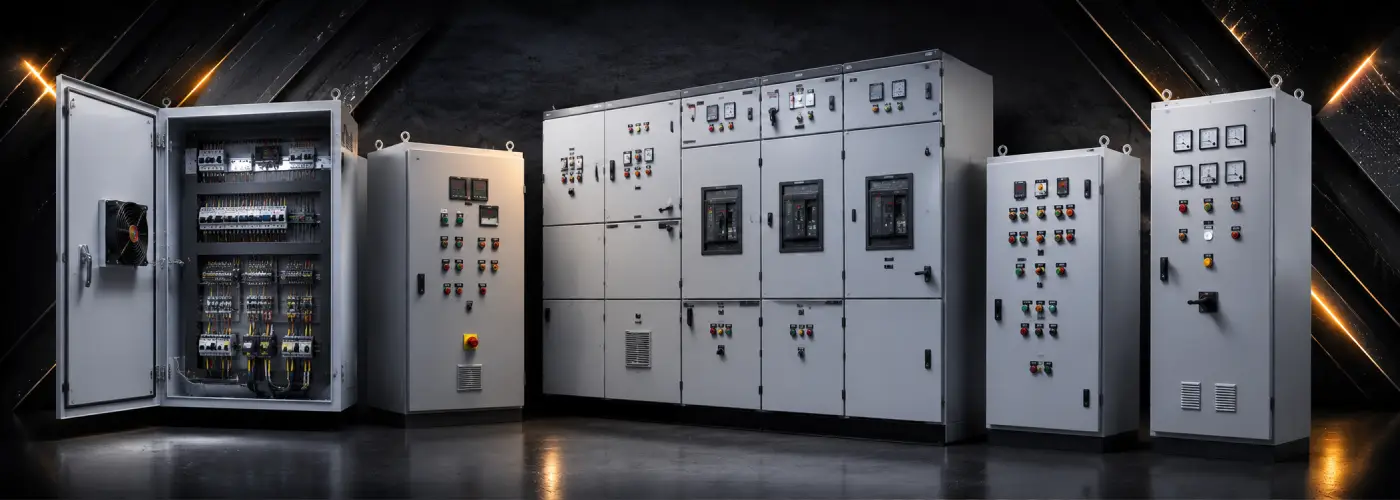
Power Control Centers (PCC Panels) Supplier
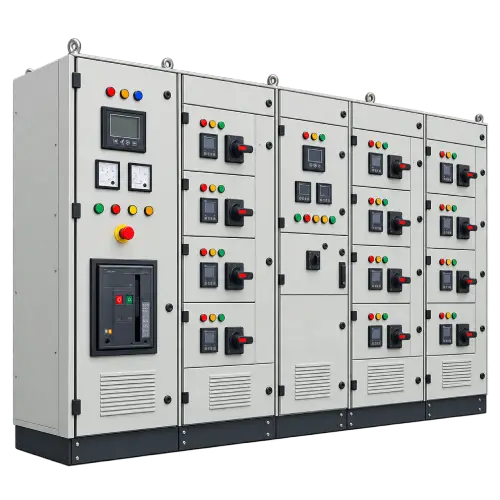
Sohum Industrial Sales Corporation supplies Power Control Centers (PCC Panels) for industrial, commercial, infrastructure, utility and large-scale electrical distribution applications. PCC Panels are designed to receive electrical power from an incoming source and distribute it safely to multiple outgoing feeders, making them an important part of a facility’s main low-voltage power distribution system.
What is a Power Control Center or PCC Panel?
A Power Control Center (PCC), commonly called a PCC Panel, is a centralised low-voltage electrical panel used for receiving, controlling, protecting, monitoring and distributing electrical power to different sections of an installation.
In a typical electrical arrangement, power from a transformer, generator or other source enters the PCC through one or more incoming feeders. The power is then distributed through a busbar system to several outgoing feeders supplying motors, machines, distribution boards, HVAC equipment, pumps and other electrical loads.
A simplified arrangement is:
Incoming Power → Main Incomer → Busbar → Outgoing Feeders → Electrical Loads
Unlike a small Distribution Board, a PCC is generally intended for larger electrical loads and multiple high-capacity feeders.
The Central Point for Plant-Wide Power Distribution
In an industrial facility, numerous machines and auxiliary systems may require power simultaneously. Connecting every load independently to the incoming source would create a complicated electrical arrangement.
A PCC Panel brings these major distribution functions together in one engineered assembly. This can provide a more structured approach to:
- Incoming power management
- Feeder distribution
- Circuit protection
- Electrical isolation
- Power monitoring
- Load management
- System expansion
The final PCC configuration is determined according to the electrical load schedule, fault level, number of feeders and project requirements.
What Components Are Found Inside a PCC Panel?
A PCC does not have one fixed internal configuration. Its components are selected according to the electrical system.
ACB Incomer
An Air Circuit Breaker (ACB) may be used as the main incoming protective and switching device for higher-current low-voltage systems.
MCCB Outgoing Feeders
Moulded Case Circuit Breakers can provide protection and switching for individual outgoing circuits.
Busbar Assembly
The busbar system distributes incoming electrical power among the outgoing feeders. Copper or aluminium may be selected according to the design.
Metering Equipment
Digital multifunction meters, ammeters, voltmeters, energy meters and CT-based measurement arrangements can be incorporated for monitoring.
Bus Coupler
Where the PCC has multiple incomers, a bus-coupler arrangement may be provided to connect or separate bus sections according to the operating philosophy.
Protection & Control Devices
Depending on the application, the panel may include protection relays, auxiliary relays, control switches, indication lamps, surge protection and other control equipment.
Typical PCC Panel Technical Specifications
The following table provides indicative specifications and configuration options. Actual ratings should be established from the approved electrical design and project requirements.
|
Parameter |
Typical Specification / Option |
|
Panel Type |
Power Control Center |
|
Application |
Low-Voltage Power Distribution |
|
System Voltage |
Commonly 415 V AC |
|
Frequency |
50 Hz |
|
Phase |
3 Phase, 4 Wire |
|
Main Incomer |
ACB / MCCB |
|
Outgoing Feeders |
MCCB / MCB / other suitable devices |
|
Busbar Material |
Copper / Aluminium |
|
Busbar Rating |
Selected according to connected load |
|
Control Voltage |
24 V DC / 110 V AC / 230 V AC, as required |
|
Metering |
Multifunction Meter / Ammeter / Voltmeter / Energy Meter |
|
Protection |
Overload / Short Circuit / Application-Specific Protection |
|
Enclosure |
Fabricated Sheet Steel |
|
Mounting |
Floor Mounted / Free Standing |
|
Cable Entry |
Top / Bottom, according to design |
|
Installation |
Indoor / Outdoor |
|
Bus Section |
Single / Multiple Section with Bus Coupler, where required |
|
Enclosure Protection |
Selected according to site conditions |
|
Assembly Standard |
Applicable IEC 61439 requirements |
The above values are general design options and should not be treated as the specification of every PCC Panel. Final voltage, current, short-circuit rating, busbar capacity, breaker selection and enclosure protection depend on the project.
PCC Panel vs Distribution Board
Although both products distribute electrical power, they serve different levels of an electrical system.
|
Feature |
PCC Panel |
Distribution Board |
|
Primary Function |
Main/major power distribution |
Circuit sub-distribution |
|
Typical Application |
Industrial & large commercial systems |
Buildings & smaller distribution systems |
|
Incoming Protection |
Often ACB/MCCB |
MCB/MCCB/Isolator, as required |
|
Outgoing Feeders |
Generally higher-capacity feeders |
Usually final/sub-distribution circuits |
|
Metering |
Commonly more comprehensive |
Basic or application-dependent |
|
Physical Size |
Generally larger |
Usually more compact |
|
Load Level |
Higher |
Lower to moderate, depending on design |
The distinction should ultimately be based on the electrical system design rather than panel size alone.
Material & Fabrication Features
PCC Panels are generally fabricated using sheet-steel enclosures designed to accommodate the selected switchgear and busbar arrangement.
Depending on the project, construction can include:
- Heavy-duty fabricated enclosure
- Separate cable chamber
- Busbar chamber
- Breaker compartments
- Removable gland plates
- Copper or aluminium busbars
- Insulated busbar supports
- Internal earthing arrangement
- Component identification labels
- Powder-coated protective finish
- Provision for cable termination
- Space for future feeder additions
The internal layout should provide suitable accessibility for operation, inspection and maintenance while maintaining required electrical clearances and segregation.
Protection and Monitoring Capabilities
A PCC Panel can be configured to provide several layers of electrical protection and monitoring.
Common functions include:
- Overload protection
- Short-circuit protection
- Earth-fault protection where required
- Under-voltage protection where required
- Surge protection
- Incoming and outgoing current measurement
- Voltage monitoring
- Energy measurement
- Breaker status indication
- Local/remote control
- Emergency shutdown arrangements where applicable
Protection settings should be coordinated with the upstream supply, cables, transformers and downstream equipment.
Quality Assurance and Testing
A PCC Panel should be evaluated as a complete low-voltage assembly rather than simply as a collection of individual components.
For assemblies falling within the applicable scope, the IEC 61439 series covers requirements and verification relating to low-voltage switchgear and controlgear assemblies. Verification areas can include construction, protective-circuit continuity, dielectric properties, temperature-rise performance, short-circuit withstand capability, mechanical operation and enclosure protection.
Routine verification is also important for confirming that the manufactured assembly conforms to the specified design.
Where PCC Panels Are Commonly Installed
PCC Panels are suitable for facilities where large quantities of electrical power need to be distributed through several feeders.
- Industrial Plants
Manufacturing lines, machinery, production units and plant utilities.
- Process Industries
Chemical, pharmaceutical, food-processing and other process-based facilities.
- Infrastructure Projects
Large buildings, utility facilities, transportation projects and development sites.
- Commercial Complexes
Shopping centres, hotels, office buildings and large institutional facilities.
- Power & Utility Installations
Transformer secondary distribution, generator systems and auxiliary power networks.
Water & Wastewater Plants
Pump stations, treatment equipment and process-control systems.
Important Points Before Ordering a PCC Panel
Before specifying a PCC Panel, the following information should be established:
- Incoming transformer/generator capacity
- System voltage and frequency
- Maximum demand/load current
- Number of incoming sources
- Number and rating of outgoing feeders
- Prospective short-circuit current
- ACB/MCCB requirements
- Busbar material and current rating
- Metering requirements
- Indoor or outdoor installation
- Cable entry direction
- Required IP/enclosure protection
- Future expansion requirements
- Protection and interlocking philosophy
These details help ensure that the PCC is properly matched to the electrical distribution network.
Why Choose Sohum Industrial Sales Corporation?
Sohum Industrial Sales Corporation supplies PCC Panels for industrial, commercial and infrastructure applications where centralised low-voltage power distribution is required. The company can support PCC requirements involving ACB/MCCB incomers, multiple outgoing feeders, busbar arrangements, metering, protection, control and customised panel configurations according to project requirements. With a focus on application-specific electrical solutions, Sohum Industrial Sales Corporation can cater to customers requiring dependable power distribution equipment for new installations, capacity expansion and electrical system upgrades.
Why PCC Panels Are Important for Large Electrical Installations
A well-designed PCC Panel provides a structured point between the main power source and the facility’s major electrical loads. It brings distribution, switching, protection and monitoring together in an organised assembly. For factories, processing plants, infrastructure projects and large commercial facilities, the right PCC configuration can simplify power management while providing a practical foundation for future electrical expansion. Sohum Industrial Sales Corporation supplies Power Control Centers for customers seeking reliable and application-oriented PCC Panel solutions.


